One of the most widely cited comedogenic ingredients lists is James Fulton's 1989 rabbit-ear survey [1][4]. It graded isopropyl myristate, isopropyl isostearate, myristyl myristate, laureth-4 and oleth-3 at 5 out of 5, and cocoa butter, lauric acid and ethylhexyl palmitate at 4. Those are lab grades from rabbit ears, not predictions for your face.
Key takeaways
- Fulton's 1989 paper graded each ingredient from 0 to 5 using rabbit ears. He read 4 to 5 as positive, 2 to 3 as borderline and 0 to 1 as not significant [1].
- Esters such as isopropyl myristate, certain fatty acids, ethoxylated alcohols and natural butters such as cocoa butter scored highest [1].
- The same ingredient can score differently depending on its source, refinement and the vehicle it is mixed in [1].
- Fulton himself said the rabbit ear is extremely sensitive and that human results remain uncertain [1].
- Treat the grades as flags to check, not verdicts.
Where does this list come from?
Fulton, of the Acne Research Institute in Newport Beach, tested ingredients on the inner ears of three rabbits each. Every ingredient was mixed at 10% in propylene glycol and applied daily, five days a week, for two weeks [1]. The width of the resulting follicular plugs was measured and converted to a 0 to 5 grade [1].
He called the survey 'not at all definitive' and said it was meant to stimulate research [1]. Other lists have since been built on it [4].
Ingredients graded 4 or 5
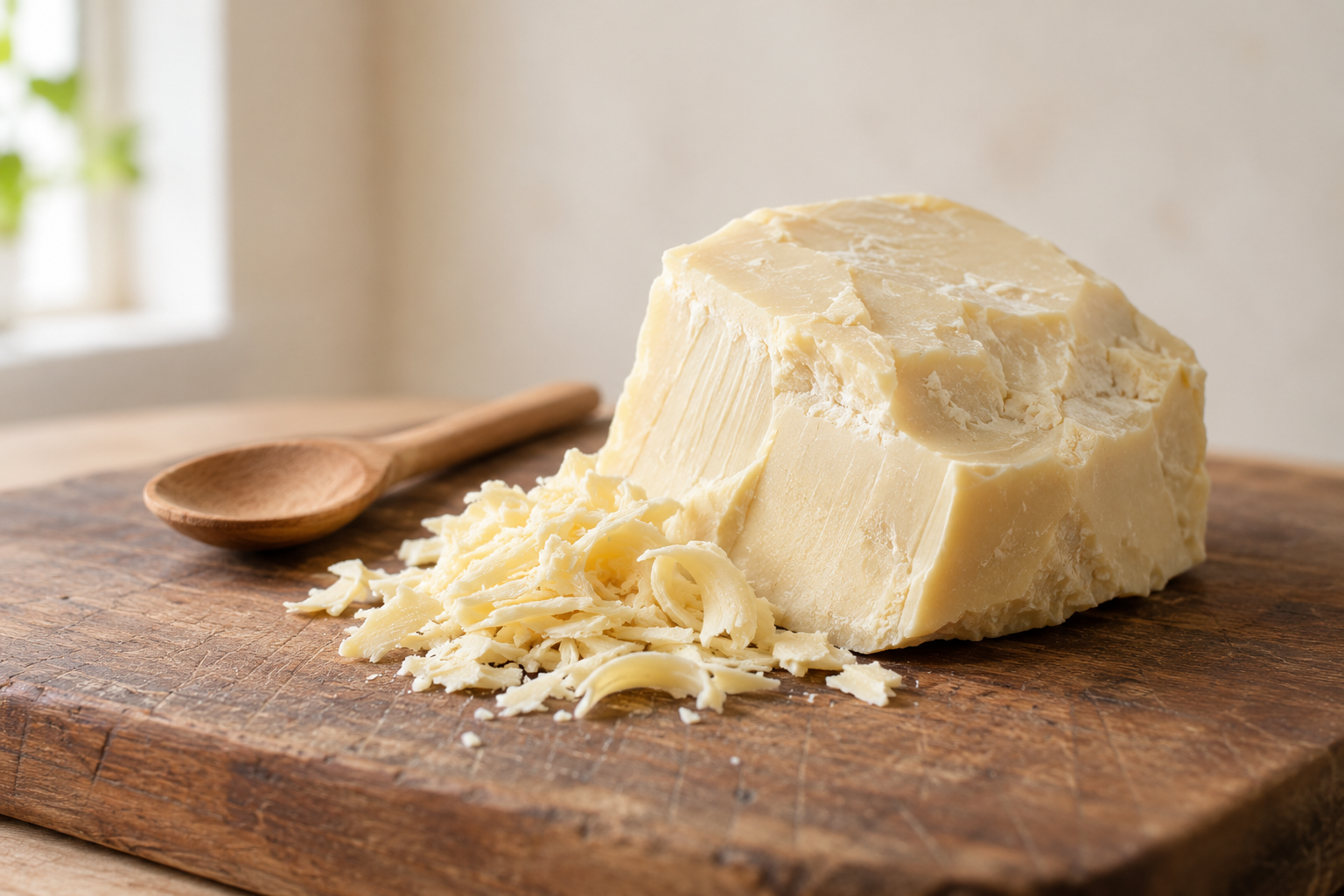
Fulton's standard 'positive' test agent was isopropyl myristate, and a grade of 5 meant large comedones across the ear, similar to that agent [1].
| Ingredient | Grade | Type |
| Isopropyl myristate | 5 | Ester |
| Isopropyl isostearate | 5 | Ester |
| Myristyl myristate | 5 | Ester |
| Laureth-4 | 5 | Ethoxylated alcohol |
| Oleth-3 | 5 | Ethoxylated alcohol |
| Isopropyl palmitate | 4 | Ester |
| Ethylhexyl palmitate | 4 | Ester |
| Isostearyl isostearate | 4 | Ester |
| Cetyl acetate | 4 | Ester |
| Acetylated lanolin alcohol | 4 | Lanolin derivative |
| Lauric acid | 4 | Fatty acid |
| Isocetyl alcohol | 4 | Fatty alcohol |
| Oleyl alcohol | 4 | Fatty alcohol |
| Cocoa butter | 4 | Natural fat |
| Coconut butter | 4 | Natural fat |
Natural does not mean low-risk here. Cocoa butter and coconut butter both graded 4, and Fulton noted that natural oils such as these have long been linked to pomade acne [1]. Note that the paper lists coconut butter, not coconut oil. A 2025 review reports that coconut oil also produced microcomedones in rabbit skin [3].
Ingredients graded 2 or 3
Fulton considered this range borderline [1].
| Ingredient | Grade |
| Myristic acid | 3 | ||
| Butyl stearate | 3 | ||
| Decyl oleate | 3 | ||
| Glyceryl stearate SE | 3 | ||
| Hydrogenated vegetable oil | 3 | ||
| Stearic acid | 2 to 3 | ||
| Palmitic acid | 2 | ||
| Cetyl alcohol | 2 | ||
| Stearyl alcohol | 2 | ||
| Cetearyl alcohol | 2 |
Ingredients graded 0 or 1
Glycerin, propylene glycol, polysorbate 20, polysorbate 80, sodium hyaluronate, panthenol, allantoin, methylparaben, tocopheryl acetate, kaolin, bentonite, cetyl palmitate, diisopropyl adipate and behenic acid all graded 0. Butylene glycol, candelilla wax, carnauba wax, talc and carbomer 940 graded 1, and anhydrous lanolin graded 0 to 1 [1].
The paper also reported that silicones (simethicone, dimethicone, cyclomethicone), titanium dioxide, iron oxides and the common sunscreen actives did not appear to be a problem [1]. Tocopherol was the exception among vitamins: Fulton called it a follicular irritant, while its derivative tocopheryl acetate was not [1].
What patterns sit behind the grades?
Fulton drew four generalizations from the results [1]:
- Medium-chain fatty acids were more potent than short or long chains.
- Combining an ingredient with a polar sugar or a heavy metal such as zinc reduced its effect.
- More ethoxylation generally meant less effect. The oleth series shows it: oleth-3 graded 5, oleth-5 graded 3, oleth-10 graded 2 and oleth-20 graded 1.
- Long-chain waxes appeared too large to produce a reaction.
He also found that esterifying a fatty acid can raise its grade. Myristic acid graded 3, while isopropyl myristate graded 5 [1].
Why does the same ingredient get different grades?
Three things moved the numbers in Fulton's own data [1]:
- Source. Lanolin alcohol, jojoba oil and beeswax each graded 0 to 2 depending on the raw material. Fulton said some mineral oil sources were acceptable and others were not.
- Vehicle. The same red pigment, D&C Red 36, graded 3 in mineral oil, 1 in propylene glycol and 0 in PEG 400.
- Combinations. Glyceryl stearate with added potassium stearate (glyceryl stearate SE) graded 3, while plain glyceryl stearate graded 1.
That is why two lists can disagree about the same ingredient.
What does the research say about using the list?
Fulton described the rabbit ear as extremely sensitive and wrote that not everything that irritates it will irritate human skin. Whether highly comedogenic ingredients in rabbits are always comedogenic in people, he said, remains uncertain, so he considered it prudent to avoid the major offenders [1].
Later work adds caution. A 2006 study on six people found that finished products containing comedogenic ingredients are not necessarily comedogenic, though it was small and tested a limited number of products [2]. A 2025 review notes that rabbit-ear ratings later proved inconsistent in human skin, and that testing isolated ingredients instead of full formulas is a methodological flaw [3]. A 2018 letter in JAMA Dermatology adds that standardized, validated testing was still lacking [5].
Put together: a high grade is a reason to look closer, not proof a product will cause breakouts.
How to use this list
- Look for 4 and 5 first. Check leave-on products, such as moisturizers, sunscreens and foundation. Fulton also noted that hair products such as pomades can cause acne on the forehead and temples [1].
- Check where it sits on the label. Lists generally run from largest amount to smallest, so a flagged ingredient near the top matters more than one near the end.
- Test one product at a time. Introduce a new product on its own and give it several weeks before judging.

To skip the manual matching, paste an ingredient list into the Klenzera scanner to see which ingredients to check first.
Frequently asked questions
Is coconut oil comedogenic?
Fulton graded coconut butter 4 [1], and a 2025 review reports coconut oil produced microcomedones in rabbit skin [3]. Human results vary, so patch test it.
Is isopropyl myristate the worst ingredient?
It graded 5, but so did several others. Fulton used it as his standard positive test agent [1].
Are silicones comedogenic?
Fulton reported that silicones did not appear to be a problem in his rabbit-ear tests [1].
Are natural oils safer?
Not automatically. Cocoa butter and coconut butter graded 4. Fulton noted that safflower and sunflower oils are naturally less comedogenic [1].
When should I see a dermatologist?
If breakouts are painful, cystic, scarring, persistent or suddenly worse, or if you suspect an allergic reaction, talk to a dermatologist or doctor.
The bottom line
Fulton's list is a useful map of which chemical families to check first, with honest limits built in. Use it to shortlist products, then let your own skin decide.
This article is for educational and informational purposes only and is not dermatological diagnosis, medical treatment, or clinical advice. Talk to a licensed dermatologist about medical concerns.
Related reading: What Does Comedogenic Mean? The Comedogenic Scale Explained
References
- Fulton JE Jr. Comedogenicity and irritancy of commonly used ingredients in skin care products. J Soc Cosmet Chem. 1989;40:321-333.
- Draelos ZD, DiNardo JC. A re-evaluation of the comedogenicity concept. J Am Acad Dermatol. 2006;54(3):507-512. doi:10.1016/j.jaad.2005.11.1058
- Comedogenicity in cosmeceuticals: a review of clinical relevance, regulatory gaps, and future directions. JAAD Reviews. 2025.
- INCIDecoder. On comedogenic and irritancy ratings. incidecoder.com/comedogenic-rating
- Maarouf M, Saberian C, Shi VY. Myths, truths, and clinical relevance of comedogenicity product labeling. JAMA Dermatol. 2018;154(10):1131-1132. doi:10.1001/jamadermatol.2018.1741