Petrolatum probably is not, and its bad reputation began with rabbit-ear results that Kligman himself later called false positives [3]. In an eight-week study of acne patients, Vaseline products showed no comedogenic potential on follicular biopsy [3]. Mineral oil is less settled: Fulton found that some sources were acceptable and others were not [2].
Key takeaways
- In 1972, Kligman and Mills reported petrolatums and mineral oils from different sources as uniformly comedogenic in the rabbit ear. With an updated assay, Kligman later called those results false positives [1][3].
- In Kligman's 1996 study, Vaseline petrolatum jelly and cream went on two groups of ten acne patients twice daily for eight weeks. Follicular biopsies showed no comedogenic potential, and papulopustules fell significantly in both groups [3].
- The tested products were Chesebrough-Ponds Vaseline products, and the groups were small. The part of the paper reviewed here does not state who funded it [3].
- Fulton's 1989 survey has no petrolatum entry. It says mineral oil presents a complex problem, because some sources are acceptable and others are not [2].
- In the 1970 pomade study, simpler preparations such as mineral oil and Vaseline produced pomade acne less often and less intensely than elaborate formulations [4].
- Kligman concluded that greasiness is not comedogenicity, which matters for 'oil-free' claims [3].
What are mineral oil and petrolatum?
Both are petroleum-derived emollients that sit on the skin. Petrolatum, also called petroleum jelly, is a semisolid widely used in dermatology [5]. Mineral oil is a liquid. On labels they appear as Petrolatum and Mineral Oil.
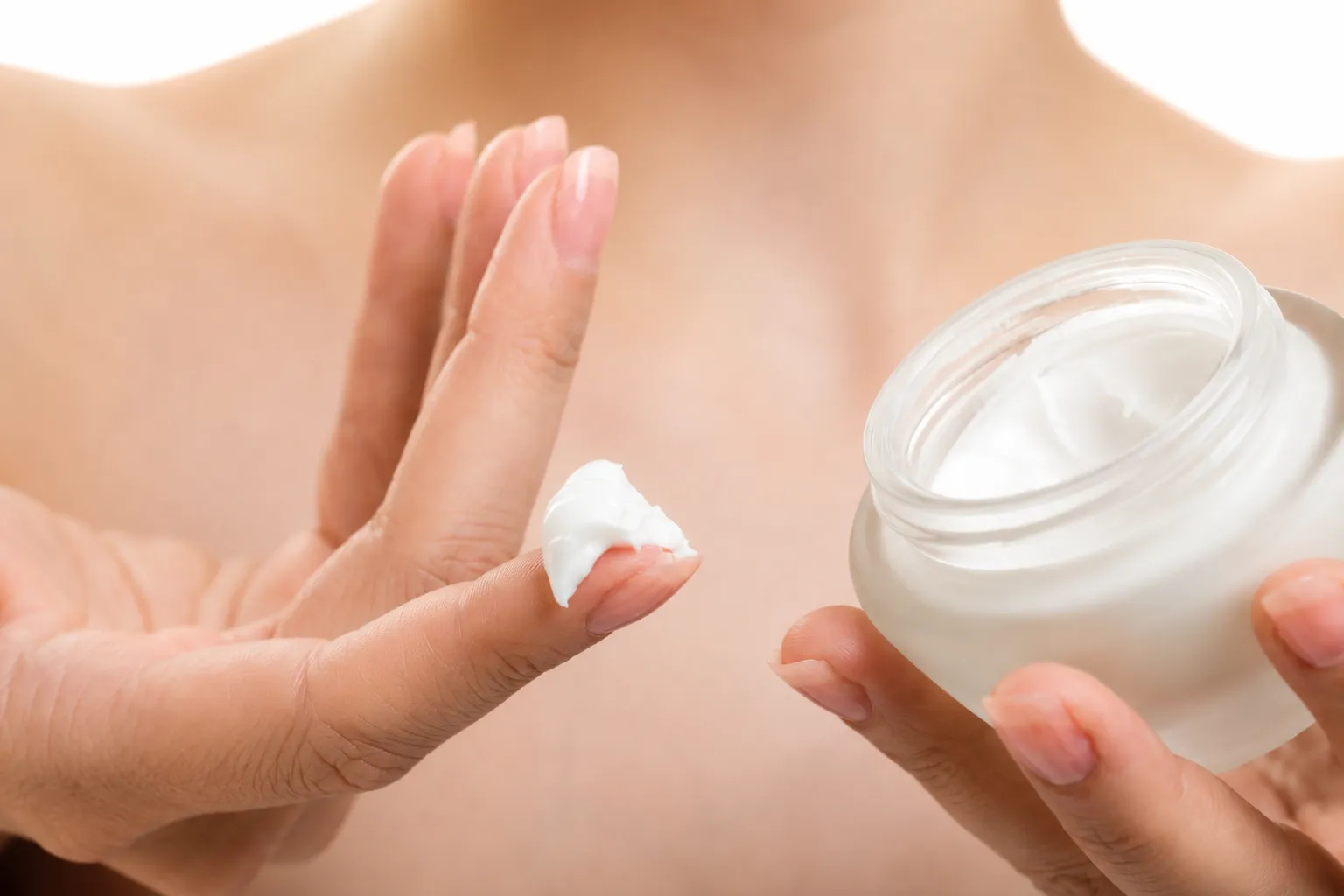
Both have carried an acne reputation for decades. The reputation has an unusual history.
Why did they get a bad reputation?
In the 1972 acne cosmetica paper, Kligman and Mills listed petrolatum among the ingredients that were comedogenic in rabbit ears [1]. Kligman later described that original model as having reported petrolatums and mineral oils from different sources as uniformly comedogenic [3].
In 1990, Kligman updated the assay with specifications meant to reduce disagreement between laboratories. With the updated model, he wrote, those petrolatum and mineral oil results turned out to be false positives [3]. He also noted that Fulton had 'blacklisted' many seemingly safe substances that had not been shown to cause acne in humans [3].
Fulton's own survey describes the rabbit ear as extremely sensitive, and says not everything that irritates it will irritate human skin [2].
What did the human study find?
The 1996 study was built to answer one question: would petrolatum worsen acne? Two groups of ten acne patients applied Vaseline petrolatum jelly or Vaseline petrolatum jelly cream twice daily for eight weeks. Follicular biopsies found no evidence of comedogenic potential, and papulopustules decreased significantly in both groups [3].
Kligman drew two broader conclusions. He wrote that greasiness cannot be equated with comedogenicity, and that advice to seek oil-free products has no scientific merit with regard to comedogenicity [3]. See Non-Comedogenic vs Oil-Free.
| Source | Finding |
| Kligman and Mills 1972 | Petrolatum listed among comedogenic ingredients in rabbit ears [1] |
| Plewig and colleagues 1970 | Simpler pomades such as mineral oil and Vaseline caused pomade acne less often and less intensely than elaborate formulations [4] |
| Fulton 1989 | No petrolatum entry. Mineral oil is a complex problem, with source differences [2] |
| Kligman 1996 | No comedogenic potential on biopsy after eight weeks in two groups of ten acne patients using Vaseline products [3] |
| Petroleum jelly review 2022 | Addresses comedogenicity and describes acne concerns about petrolatum as myths [5] |
Why does mineral oil get a mixed answer?
Fulton's data point to the vehicle and the source, not to mineral oil alone. A red pigment, D&C Red #36, graded 3 in mineral oil, 2 in pentaerythrital tetracaprate/caprylate, 1 in propylene glycol and 0 in PEG 400 [2]. Fulton wrote that the combination of that pigment and mineral oil appeared more comedogenic than either alone [2].
He also said mineral oil sources differ: some are acceptable, others are not [2]. That is a different claim from calling mineral oil itself comedogenic.
Two researchers, two readings
The disagreement between the two founders of the rabbit-ear method is part of the story.
| Fulton | Kligman |
| On rabbit-ear positives | Ingredients that are comedogenic in the rabbit ear should not be dismissed because human back tests are negative after eight weeks [2] | Many fatty ingredients flagged by the rabbit ear have not been shown to cause acne in humans [3] |
| On timing | Reactions may take as long as six months to develop on human skin [2] | His own human test ran eight weeks [3] |
| On lower concentrations | Not convinced they are safe [2] | Strongly comedogenic substances can become non-comedogenic after sufficient dilution [3] |
Both views come from careful researchers. They suggest humility about any single number.
What does the evidence not show?
- Mineral oil in humans. Kligman's study centered on petrolatum. The sources reviewed include no comparable human trial for mineral oil [3].
- Long-term effects. Eight weeks is shorter than the time Fulton said some reactions can take [2][3].
- Independence. The tested products belong to the company that made them, and the part of the paper reviewed here does not state the funding [3].
- A finished product. A 2006 study found that finished products using comedogenic ingredients are not necessarily comedogenic [6]. Products that contain petrolatum or mineral oil can still contain other ingredients worth checking.
What can you do about it?
- Check the rest of the product. Paste an ingredient list into the Klenzera scanner to see what sits alongside Mineral Oil or Petrolatum.
- Do not avoid a product just because it is greasy or oil-based. The 1996 paper is explicit that greasiness is not the same as comedogenicity [3]. See Are Comedogenic Ratings Reliable?.
- Test one product at a time. Use the steps in How to Know If a Product Will Clog Your Pores.
Frequently asked questions
Is petrolatum comedogenic?
In the one human study reviewed, it showed no comedogenic potential after eight weeks [3]. Early rabbit-ear results that said otherwise were later described as false positives [3].
Is mineral oil comedogenic?
The evidence is mixed. Fulton said some sources are acceptable and others are not [2], and the sources reviewed include no direct human trial.
Does Vaseline cause acne?
In Kligman's study, acne patients using Vaseline products had fewer papulopustules and no comedogenic potential on biopsy [3]. The study was small and short.
Is oil-free better for acne-prone skin?
Not necessarily. Kligman wrote that oil-free advice has no scientific merit with regard to comedogenicity [3].
When should I see a dermatologist?
If breakouts are painful, cystic, scarring, persistent or suddenly worse, or if you suspect an allergic reaction, talk to a dermatologist or doctor.
The bottom line
Petrolatum's reputation as a pore-clogger rests on rabbit-ear results its own discoverer later retracted, and the human evidence is reassuring but small. Mineral oil is less settled. Check the whole product, and let your own skin decide.
This article is for educational and informational purposes only and is not dermatological diagnosis, medical treatment, or clinical advice. Talk to a licensed dermatologist about medical concerns.
Related reading: Comedogenic Ingredients List | Non-Comedogenic vs Oil-Free | What Is Acne Cosmetica? | Does Ingredient Order Matter?
References
- Kligman AM, Mills OH Jr. Acne cosmetica. Arch Dermatol. 1972;106(6):843-850.
- Fulton JE Jr. Comedogenicity and irritancy of commonly used ingredients in skin care products. J Soc Cosmet Chem. 1989;40:321-333.
- Kligman AM. Petrolatum is not comedogenic in rabbits or humans: a critical reappraisal of the rabbit ear assay and the concept of 'acne cosmetica'. J Soc Cosmet Chem. 1996;47:41-48.
- Plewig G, Fulton JE, Kligman AM. Pomade acne. Arch Dermatol. 1970;101(5):580-584.
- Petroleum jelly: a brief review of its history, uses and safety. J Cosmet Sci. 2022;73(3).
- Draelos ZD, DiNardo JC. A re-evaluation of the comedogenicity concept. J Am Acad Dermatol. 2006;54(3):507-512. doi:10.1016/j.jaad.2005.11.1058